


On the morning of September 16, 2025, the STAR-OM research dissemination workshop took place in Room 514, Building A7, at Hanoi Medical University. The event welcomed representatives from the Government Office, Hanoi Department of Health, Viet Nam Administration of Disease Prevention – Ministry of Health, Vietnam’s Counter Narcotics Police Department, University of Medicine and Pharmacy at Ho Chi Minh City, Vietnam People’s Police Academy, U.S. CDC, UNODC, Hanoi CDC, Nghe An CDC, Dien Bien CDC, Lai Chau CDC, Hai Phong CDC, Tu Liem Ward Health Station, Hai Ba Trung Ward Health Station, Tay Ho Ward Health Station, Dinh Cong Ward Health Station, Van Dinh Commune Health Station, Lang Ward Health Station, Viet Hung Ward Health Station, SCDI, District 10 Health Center, District 4 Health Center, University of California – Los Angeles, and the Center for Training and Research on Substance Abuse – HIV. The workshop provided an opportunity for policymakers, experts, and healthcare professionals to discuss emerging evidence on reducing methamphetamine (meth) use—an increasingly pressing challenge in methadone maintenance treatment in Vietnam.
Opening: The Significance of the STAR-OM study
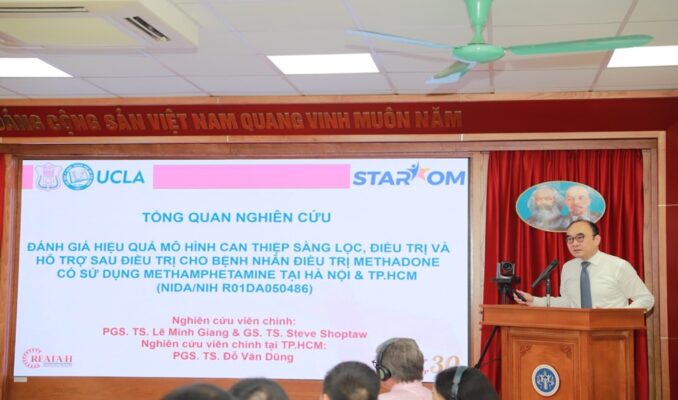
Associate Professor Dr. Le Minh Giang, MD, PhD emphasized that this is the first large-scale study in Vietnam to implement interventions aimed at reducing methamphetamine use among patients receiving methadone maintenance treatment, in the context of increasingly common concurrent use of heroin and meth. The STAR-OM study has demonstrated both the feasibility and effectiveness of Contingency Management (CM) and psychosocial therapies, showing noticeable reductions in meth and heroin use during at least the first 12 weeks. In addition, the ASSIST screening tool has shown potential to be as effective as urine testing, making it suitable for broader application in MMT clinics and primary healthcare settings.
Research overview and intervention effectiveness
In the opening presentation, Associate Professor Dr. Le Minh Giang provided an overview of the STAR-OM study and highlighted its key findings: high participation rates, dual effectiveness in reducing both methamphetamine and heroin use, and the potential to integrate interventions into the existing methadone maintenance treatment system. He emphasized that scaling up psychosocial interventions – particularly Contingency Management (CM) – is entirely feasible in Vietnam. He also recommended the use of screening tools such as ASSIST as an alternative to urine testing, noting their potential to reduce costs and improve overall effectiveness.
Patterns of methamphetamine use in methadone maintenance programs
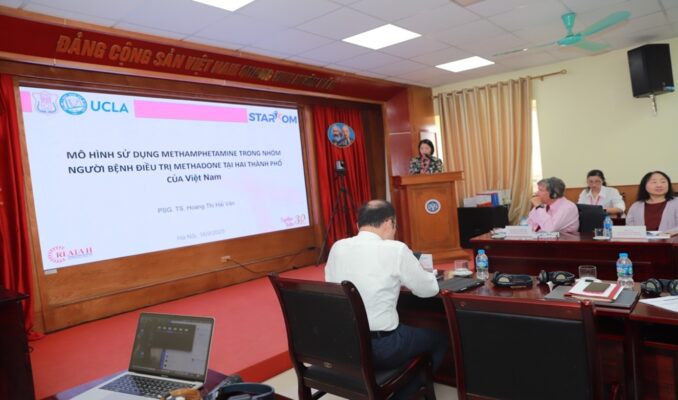
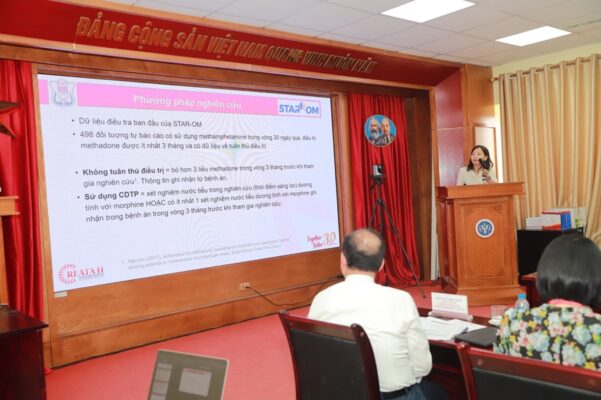
Associate Professor Dr. Hoang Thi Hai Van and Dr. Nguyen Bich Diep analyzed the diverse patterns of methamphetamine use among methadone patients and their impact on treatment adherence. The study found that both the reasons for meth use (such as emotional relief or social interaction) and the form of use (crystal or pill) were closely linked to the risk of discontinuing methadone maintenance treatment. The speakers emphasized the importance of regular screening, behavioral classification, and the design of individualized interventions to improve treatment outcomes.
Economic Effectiveness of the Intervention
Dr. Nguyen Le Tuan Anh presented a health economic analysis showing that a 12-week CM intervention achieved higher response rates compared to a 6-week program, with only a modest increase in cost. However, among patients who did not respond to CM, adding the Matrix therapy provided only limited additional benefits. These findings suggest the need for flexible treatment planning, tailored to each patient’s level of response.
Opportunities and Challenges in Implementation
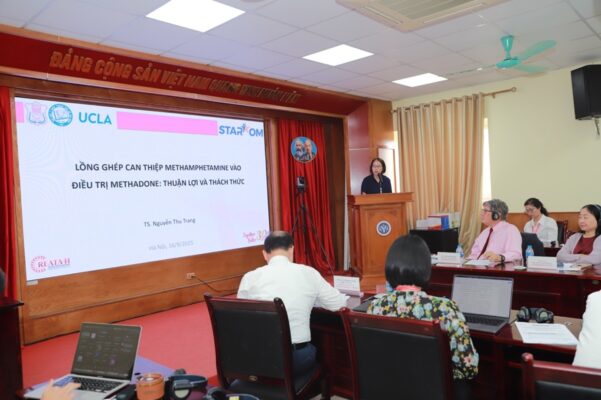
Dr. Nguyen Thu Trang shared experiences from implementing the STAR-OM intervention at MMT clinics. Both patients and healthcare staff reported that the intervention helped reduce methamphetamine use. However, several challenges remain, including workforce shortages, low healthcare staff salaries, and a legal framework that does not yet permit MMT clinics to intervene directly in methamphetamine use. These barriers highlight the need for policy support and adjustments in institutional roles to ensure sustainability when scaling up the model.
The panel discussion, chaired by Associate Professor Dr. Le Minh Giang, Professor Steve Shoptaw, and Professor Li Li, highlighted several key points:
- MMT clinics have the capacity to deliver psychosocial interventions, provided that staff receive adequate training and supervision.
- A combination of approaches (CM, Matrix, and future pharmacological options) is needed to achieve comprehensive effectiveness.
- Vietnam requires models tailored to its available resources and legal framework – ensuring effective treatment while remaining consistent with drug control regulations.
Representatives from MMT clinics and regulatory agencies also shared their perspectives on the impacts of recent changes to the drug control law, including concerns over declining patient numbers and funding constraints. Participants unanimously agreed on the need for standardized training materials that can be used not only by healthcare providers but also by community workers and police forces, thereby extending interventions to the grassroots level.
The workshop concluded with a commitment to further develop training materials and expand research on the STAR-OM intervention model. Evidence from the study confirms that reducing methamphetamine use within Vietnam’s methadone maintenance treatment system is entirely feasible – contributing to improved treatment quality, reducing the burden of synthetic drugs, and safeguarding public health in the context of rapidly evolving epidemiological trends.


Bài viết liên quan: